Choosing a reliable Detachable Container House manufacturer requires more than comparing attractive photographs or low factory prices. This guide introduces seven established manufacturers serving international markets, with attention to design quality, production experience, and practical delivery support. A strong supplier should understand modular engineering, safe lifting points, weather resistance, insulation, and repeated assembly. These details matter when a unit travels from a factory to a construction site.
Look closely at the structure. Are the steel frames accurately welded? Do the wall panels resist moisture and temperature changes? Can doors, windows, plumbing, and electrical systems be replaced without dismantling the entire house? We also consider factory quality control, documented materials, installation guidance, warranty terms, and communication after delivery. A manufacturer may offer excellent customization, yet weak technical support can create costly delays. The opposite can also happen.
Marketing is not proof.
No ranking is perfectly universal. Climate, transport distance, local building requirements, and project budgets change the best choice. Some manufacturers excel in rapid deployment, while others provide stronger insulation or more refined interiors. Buyers should verify certifications, inspection records, references, and full quotations before signing agreements. Sample drawings and a factory visit can reveal more than a polished brochure. Even this overview has limits; product lines and service capabilities can change over time. Still, these seven companies provide a useful starting point for comparing dependable Detachable Container House solutions with clearer expectations and fewer surprises.
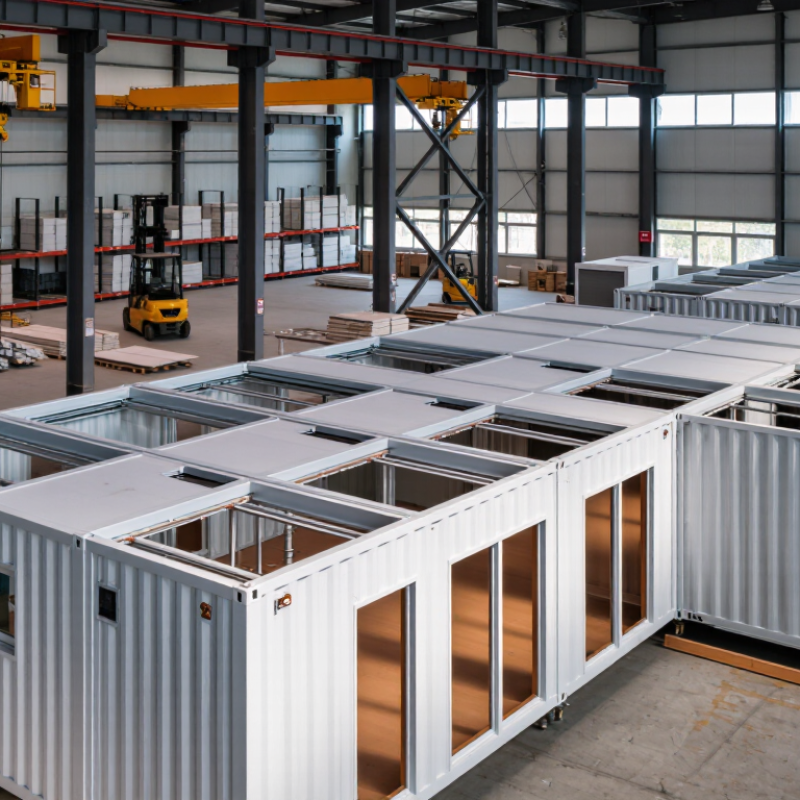
Detachable container houses combine modular design with reusable construction. Their steel frames are bolted, not permanently welded, so teams can assemble, relocate, and reuse units. Wall panels usually contain insulation, electrical conduits, and moisture-resistant finishes. Roof design matters greatly. A shallow roof may reduce cost, but it can collect water in heavy rain. Field inspections often reveal this overlooked weakness.
These houses serve as temporary offices, worker accommodation, classrooms, clinics, and emergency shelters. Their compact dimensions simplify transport, while factory production improves consistency. However, site conditions still shape performance. Uneven ground can distort door frames, and poor drainage may damage floor panels. A practical design includes adjustable supports, ventilation openings, fire-resistant materials, and accessible maintenance points. A perfect plan rarely survives its first installation.
Tips: Check insulation thickness, connector quality, drainage, and local foundation requirements before ordering. Ask for structural drawings and installation records. Measure internal airflow, not only room size. Keep spare seals and fasteners on site. Small details matter.
7 Best Detachable Container House Manufacturers Worldwide
How to Evaluate Detachable Container House Manufacturers Worldwide
Choosing a detachable container house manufacturer requires more than comparing prices. McKinsey’s 2019 modular construction report estimated a potential 130 billion dollar market across the United States and Europe. It also identified savings of up to 20 percent through factory production. These figures show the value of standardization, but they do not prove quality. Ask how many completed units have survived relocation, not just how many factories exist.
Examine the manufacturer’s technical evidence. Request structural drawings, material certificates, fire-test results, and thermal calculations for your climate. The 2023 UNEP Global Status Report stated that buildings produced about 37 percent of global energy and process-related emissions in 2022. Therefore, inspect insulation thickness, window performance, air leakage control, and roof detailing. A bright showroom can hide weak joints.
Visit the production line if possible. Check welding consistency, corrosion protection, electrical testing, and water-pressure tests. Require a written inspection plan with measurable tolerances. Review loading methods, replacement-part availability, installation training, and after-sales response times. Ask for references from projects with similar wind, snow, and humidity conditions. Some manufacturers provide impressive renderings but vague maintenance instructions. That is a warning. I would also test one prototype through assembly and disassembly before ordering at scale. This costs time, yet it may expose damaged panels, poor connectors, or inaccurate manuals.
Seven leading detachable container house manufacturers are best compared by evidence, not glossy renderings. Supplier One focuses on rapid assembly, while Supplier Two offers stronger insulation packages. Supplier Three stands out for foldable transport frames. Supplier Four provides wider room modules. Supplier Five emphasizes fire-rated panels. Supplier Six competes through factory automation. Supplier Seven offers more flexible interior layouts. These differences affect delivery time, comfort, and maintenance.
A professional comparison should check steel thickness, welding quality, panel density, thermal bridges, drainage, and lifting points. On site, poorly sealed corner joints can admit rain within one season. Small details matter. The McKinsey report “Modular Construction: From Projects to Products” states that modular methods can shorten schedules by 20% to 50%, while reducing costs by up to 20% in suitable projects. Those figures are useful, but not guaranteed. Remote sites, weak foundations, and transport permits can erase the advantage.
The Dodge Data & Analytics report on prefabrication also links factory production with better schedule control and less material waste. Buyers should request test certificates, installation manuals, warranty terms, and completed project references. The UNEP Global Status Report notes that buildings remain a major source of global energy demand, making insulation and efficient heating increasingly important. A cheaper unit may still cost more over ten years. Some comparisons miss this. They should not.
Industry reference comparison of the standard module formats commonly used by leading detachable container house manufacturers. Dimensions are based on widely adopted ISO container sizes.
The 20-foot format is suitable for compact accommodation and offices, while 40-foot formats provide more usable floor length. The high-cube version offers additional internal height for insulation, services, and improved living comfort.
Detachable container houses differ sharply in build quality, even when their photographs look similar. Experienced buyers inspect the steel frame, weld consistency, insulation density, and floor loading before comparing prices. A strong unit should resist repeated assembly without distorted joints. Check the roof drainage, window seals, electrical protection, and corrosion treatment. Small omissions become expensive during installation.
Customization also changes the final value. Some manufacturers offer fixed layouts with limited finishes, while others adjust room sizes, doors, plumbing routes, and insulation systems. Ask for technical drawings, material samples, and a written list of included fixtures. A beautiful rendering is not proof of practical design. In my project reviews, clients sometimes requested large glass walls, then reconsidered after seeing heat gain and transport limits. That lesson is easy to miss.
Pricing should include more than the factory quotation. Freight, unloading equipment, foundation preparation, local connections, taxes, and installation can alter the budget considerably. Delivery performance depends on production capacity, quality inspections, packaging, and port coordination. Request milestone dates and photographs before shipment. A cheaper offer may arrive later or require more site work. I have also seen premium specifications delayed by poor scheduling. Buyers should compare warranty terms, replacement procedures, and response times, not only the headline price. Clearance around the site matters too. One narrow access road can change the entire delivery plan.
Selecting the right detachable container house manufacturer requires more than comparing catalog prices. Start with your project brief: site access, climate, occupancy, transport distance, and intended service life. A manufacturer should provide verified drawings, material specifications, load calculations, and a clear installation method. Ask who approves the structural design.
McKinsey & Company reported in 2019 that modular construction can reduce construction time by 20–50% and costs by up to 20%. These figures are useful benchmarks, not promises. The result depends on logistics, factory control, and local labor. The Dodge Data & Analytics 2020 SmartMarket report also identified rising adoption of prefabrication among contractors. Request project references with similar weather and foundation conditions.
Inspect the factory if possible. Look for moisture barriers, weld quality, insulation thickness, window seals, and protected electrical routes. A polished showroom proves little. I would request a sample wall section before signing. Small details matter. Confirm whether the quoted price includes transport, lifting, foundations, utilities, testing, and after-sales repairs. Check quality systems such as ISO 9001, but do not treat certification as a substitute for independent inspection. Some manufacturers offer impressive renderings while leaving drainage and thermal bridging unresolved. That is where budgets often weaken. Review local building, fire, electrical, and energy requirements with a qualified professional before production begins.
Request structural drawings, material certificates, fire-test results, and thermal calculations. Do not rely on polished renderings alone.
Inspect steel thickness, weld consistency, corrosion treatment, insulation density, and floor loading. A bright showroom can hide weak joints.
Visit if possible. Check welding, electrical testing, water-pressure tests, packaging, and written inspection tolerances.
A trial assembly can reveal damaged panels, poor connectors, or unclear manuals. It costs time, but prevents larger mistakes.
Ask for evidence suited to local wind, snow, humidity, and heat. Check insulation, window seals, air leakage, drainage, and roof detailing.
Include freight, unloading equipment, foundations, installation, taxes, and local connections. The lowest quotation may become expensive later.
Confirm room sizes, doors, plumbing routes, insulation systems, finishes, and included fixtures. Large glass walls may increase heat gain.
Request milestone dates, inspection photographs, packaging details, and port coordination plans. One narrow access road can disrupt delivery.
Check response times, replacement procedures, maintenance instructions, and spare-part availability. Vague support terms are a warning.
No. Factory production may improve control, but weak foundations, permits, remote sites, or poor scheduling can erase the advantage.
This guide explores the design, structure, and practical applications of the Detachable Container House, explaining how its modular construction supports rapid installation, relocation, and flexible use in residential, commercial, educational, office, and temporary accommodation projects. It also outlines the main factors for evaluating manufacturers worldwide, including material quality, structural safety, insulation, weather resistance, production capability, customization options, certifications, communication, and after-sales support.
A comparison of seven leading manufacturer types highlights key differences in product quality, design flexibility, pricing, manufacturing capacity, and delivery schedules. Rather than focusing only on the lowest quotation, buyers should assess total project value, including transportation, installation, maintenance, energy efficiency, and long-term durability. The final section provides a practical selection framework to help project owners match a manufacturer’s expertise, product configuration, budget, lead time, and service capacity with their specific requirements.