0%

Choosing a Portable Sanitary Toilet Module is not only a question of convenience. It is a practical decision about hygiene, mobility, dignity, and site management. These units support construction projects, outdoor events, emergency facilities, remote workplaces, and temporary public spaces. They can be delivered quickly, positioned with limited ground preparation, and removed when the project ends. That flexibility matters.

Clean facilities matter.

Jack Sim, founder of the World Toilet Organization and a recognized sanitation advocate, has said, “A toilet is not just a toilet. It is a symbol of dignity.” His statement reflects an important industry truth. A well-designed Portable Sanitary Toilet Module should provide privacy, ventilation, handwashing access, safe waste containment, and straightforward cleaning. Strong materials also help the unit withstand repeated transport and daily use. In practice, small details matter, including non-slip flooring, usable door hardware, interior lighting, and clear service access.

However, portable does not mean maintenance-free. Poor placement can create odors, access problems, or drainage concerns. Capacity must match expected users and service frequency. Local health, accessibility, transport, and waste-management requirements also deserve professional review. Some buyers focus only on the purchase price, which may become a costly mistake. A reliable assessment should consider installation, cleaning schedules, pumping, durability, and end-of-use handling. The ideal solution is rarely the most impressive-looking unit. It is the module that performs consistently, remains sanitary, and fits the site’s real conditions. There may be compromises. Good planning makes them visible.
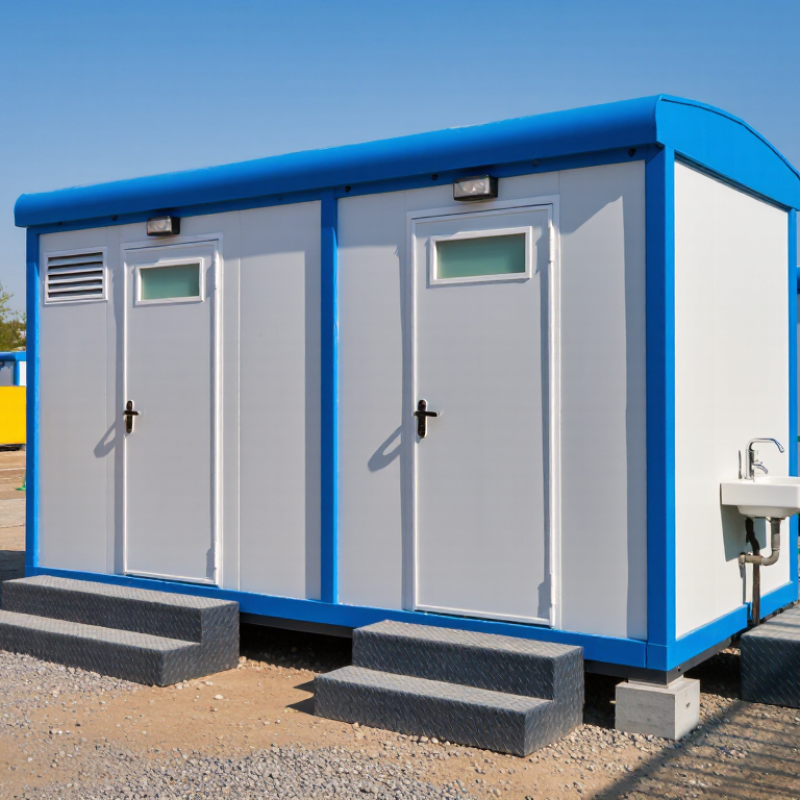
Why Choose a Portable Sanitary Toilet Module?

What Is a Portable Sanitary Toilet Module? Components, Functions, and Uses

A portable sanitary toilet module is a self-contained sanitation unit designed for temporary or changing locations. It combines a private enclosure, toilet pan, waste-holding tank, ventilation, and a lockable access door. Many units also include a handwashing basin, soap dispenser, mirror, lighting, and an optional ramp. These components support hygiene, privacy, and safer movement for users.

The World Health Organization and UNICEF Joint Monitoring Programme reported that 3.5 billion people lacked safely managed sanitation in 2022. Of these, 1.5 billion lacked even basic sanitation services (WHO/UNICEF JMP, 2023). Portable modules can help close short-term service gaps at construction sites, outdoor events, emergency shelters, parks, and remote workplaces. A sealed tank limits direct soil contact, while planned servicing controls odors and prevents overflow. Small details matter. Non-slip flooring and clear service access can reduce practical risks.

A module is not automatically sanitary. Poor cleaning schedules, weak ventilation, or incorrect tank sizing can quickly undermine its purpose. Field inspections often reveal this gap. The unit looks clean, but the handwashing station is empty. Operators should record cleaning times, waste levels, water supplies, and damage during every visit. The U.S. Environmental Protection Agency notes that toilets account for nearly 30% of indoor household water use, making low-water or waterless designs useful where supply is limited. Still, water-saving hardware cannot replace careful maintenance.

Global Sanitation Need: 3.5 Billion People Lack Safely Managed Services

Why Choose a Portable Sanitary Toilet Module?

Global Sanitation Need: 3.5 Billion People Lack Safely Managed Services

According to WHO and UNICEF, 3.5 billion people lack safely managed sanitation services. This figure represents crowded neighborhoods, remote villages, temporary shelters, and workplaces without reliable toilets. A portable sanitary toilet module can provide a controlled facility where permanent construction is slow, expensive, or impossible.

These modules are useful near construction sites, emergency clinics, schools, and public gatherings. A well-designed unit may include a sealed waste tank, ventilation, handwashing access, non-slip flooring, and lighting. Those details matter. A wet floor or missing soap can quickly turn a useful facility into a health concern. Clear cleaning schedules and inspection records also support safer daily operation.

In field projects, placement is as important as the toilet itself. Units need stable ground, privacy, wheelchair access, and regular servicing. Poor planning can create odors, queues, or difficult access for older users. Not every portable module performs equally. Some are uncomfortable in hot weather, while others need more frequent maintenance than expected. This is where user feedback becomes valuable. A worker’s note about a blocked drain may reveal more than a polished specification sheet. Practical sanitation improves when designers, operators, and communities keep adjusting the system.

Why Choose a Portable Sanitary Toilet Module?

Global sanitation access remains a major challenge: approximately 3.5 billion people lack safely managed sanitation services.

In 2022, about 57% of the global population used safely managed sanitation services, while the remaining population relied on lower service levels or practiced open defecation. Portable sanitary toilet modules can support rapid, flexible sanitation deployment in temporary sites, emergencies, remote areas, and locations with limited infrastructure.

Source: WHO/UNICEF Joint Monitoring Programme for Water Supply, Sanitation and Hygiene, 2022 global estimates. Percentages are rounded.

How Modular Construction Enables Rapid Deployment at Temporary Sites

Why Choose a Portable Sanitary Toilet Module?

How Modular Construction Enables Rapid Deployment at Temporary Sites

Temporary sites rarely offer the time or infrastructure needed for permanent restroom construction. A portable sanitary toilet module addresses this gap with factory-built components and predictable installation steps. Walls, flooring, plumbing points, ventilation, and fixtures can be prepared before delivery. Crews then position the module, level it, and connect approved water and waste services. This process can reduce disruption around active work areas.

Speed matters, but preparation matters more. A site manager should check ground conditions, vehicle access, drainage capacity, and user flow before ordering units. A flatbed truck may arrive quickly, yet poor access can delay unloading for hours. Accurate measurements help avoid that problem. Clear routes also protect workers and reduce handling risks.

Modular construction supports consistent quality because many tasks occur in a controlled workshop. Sealed joints, non-slip floors, handwashing facilities, and easy-clean surfaces can be inspected before shipment. Maintenance teams benefit from accessible service panels and replaceable components. Good ventilation is especially important in enclosed units. Small details matter.

The approach is not flawless. Modules still need regular cleaning, reliable utility connections, and sensible placement. A rushed layout may create queues or limit accessibility. Field feedback should shape later deployments, even when the first installation appears successful. Portable does not mean effortless.

Capacity Planning: OSHA Requires One Toilet for Up to 20 Workers

Why Choose a Portable Sanitary Toilet Module?

Capacity planning begins with a clear number. OSHA Construction Standard 29 CFR 1926.51(c)(1) requires at least one toilet for 20 or fewer workers. For 21 to 200 workers, the standard increases to one toilet seat and one urinal per 40 workers. These figures make a portable sanitary toilet module practical for construction sites, temporary projects, and remote work areas. A unit can be positioned near active crews, reducing travel across uneven ground, mud, or unfinished floors.

The calculation is simple. Real sites are not. Project managers should count peak staffing, subcontractors, and expected visitors, rather than relying on the morning headcount. OSHA also requires sanitary, readily accessible facilities, so placement and servicing matter as much as quantity. The National Institute for Occupational Safety and Health links poor sanitation access with preventable hygiene risks, especially where handwashing is limited. A module with a nearby handwashing station, sealed waste tank, ventilation, and regular servicing supports better daily control.

Small oversights become visible quickly. One extra crew can change the planning range. Shift changes can create queues. Reviewing the layout weekly is wiser than assuming the original estimate remains accurate. Portable capacity offers flexibility, but it does not replace inspection, cleaning records, or worker feedback.

Why Choose a Portable Sanitary Toilet Module? - Capacity Planning: OSHA Requires One Toilet for Up to 20 Workers

Peak Workforce OSHA Minimum Toilets Suggested Portable Modules Estimated Daily Visits* Suggested Servicing Capacity-Planning Application
1–20 workers 1 1 4–80 Weekly or as needed Suitable for small work crews, short-term projects, and remote locations.
21–50 workers 2 2 84–200 At least weekly Two modules reduce waiting time and provide operational redundancy.
51–100 workers 2 2–3 204–400 2–3 times weekly Additional capacity may be appropriate for shift changes, high-use areas, or dispersed job sites.
101–150 workers 2 3–4 404–600 Daily to 3 times weekly Useful where peak occupancy, traffic flow, or site layout requires shorter walking distances.
151–200 workers 2 3–5 604–800 Daily service recommended Use site-specific demand, work shifts, and event conditions to determine the final quantity.
201–240 workers 3 4–6 804–960 Daily service recommended OSHA’s additional-toilet rule begins above 200 employees; portable modules can be positioned by work zone.
241–400 workers 3–7 5–8 964–1,600 Daily service or more often Multiple modules help distribute demand across large construction sites, plants, and outdoor events.
Planning notes: OSHA 29 CFR 1910.141(c)(1)(i) requires at least one toilet facility for 1–20 employees, two for 21–200 employees, and one additional toilet facility for each additional 40 employees beyond 200. The suggested portable-module quantities and servicing intervals are practical planning estimates, not OSHA requirements. Daily visits are estimated using four visits per worker per day and should be adjusted for shift length, climate, work type, visitor volume, and local regulations.

Why Choose It? Water Efficiency, Hygiene Control, and Flexible Expansion

Why Choose a Portable Sanitary Toilet Module?

Water efficiency is a practical reason to choose a portable sanitary toilet module. Many units use little or no flush water, reducing pressure on temporary water systems. The U.S. Environmental Protection Agency reports that toilets can account for nearly 30% of indoor household water use. That figure makes water-saving sanitation especially relevant at construction sites, festivals, relief projects, and remote facilities. Still, performance depends on correct servicing. A poorly maintained unit can waste resources in other ways.

Hygiene control also depends on design and routine management. Smooth, non-porous surfaces support faster cleaning. Sealed waste tanks help limit odors and contact risks. Handwashing access remains essential. The WHO and UNICEF Joint Monitoring Programme reported in 2023 that 3.5 billion people lacked safely managed sanitation in 2022. Portable modules cannot solve that global gap alone. They can, however, provide controlled sanitation where permanent systems are unavailable. Small details matter.

Flexible expansion adds operational value. Modules can be installed individually, linked in groups, or relocated as site demands change. Field teams should check ventilation, access routes, drainage plans, and cleaning frequency before installation. Expansion is not always simple. Ground conditions, user volume, and local service capacity can change the result. The World Health Organization recommends risk-based sanitation planning, which supports regular inspection and documented maintenance. A compact module is useful, but only when its surrounding system is reliable.

FAQS

Why use a portable sanitary toilet module?

It provides controlled sanitation where permanent construction is delayed, costly, or impossible. Common locations include construction sites, schools, clinics, shelters, and public events. It is practical, but not a complete sanitation solution.

How many workers can one toilet serve?

Planning rules commonly require one toilet for up to 20 workers. Larger teams may need additional toilet seats and urinals. Count peak staffing, subcontractors, visitors, and shift changes.

What features support better hygiene?

Look for a sealed waste tank, ventilation, handwashing access, lighting, and non-slip flooring. Smooth, non-porous surfaces simplify cleaning. Missing soap can quickly undermine the whole setup.

Does a portable module save water?

Many units use little or no flush water. This reduces pressure on temporary water supplies. However, poor servicing may create other waste and hygiene problems.

Where should the unit be placed?

Choose stable, level ground near users, but away from unsafe traffic paths. Provide privacy, wheelchair access, lighting, and clear routes. Mud changes everything.

How should capacity be checked?

Review staffing levels regularly, especially after new crews arrive. One extra team can create queues during breaks. Weekly layout checks are useful, though they are easy to forget.

How often does the module need servicing?

Servicing frequency depends on user volume, tank size, weather, and local conditions. Cleaning schedules, inspection records, and waste removal should be documented. The original estimate may be wrong.

Can several modules be linked or relocated?

Yes, modules can often operate alone, work in groups, or move as needs change. Check drainage, access routes, ground conditions, ventilation, and service capacity before expanding. More units do not automatically mean better management.

Conclusion

A Portable Sanitary Toilet Module is a self-contained, movable sanitation unit designed for construction sites, events, emergency response areas, remote projects, and other temporary locations. It typically combines toilet fixtures, a waste-holding or treatment system, ventilation, handwashing facilities, lighting, and durable structural panels. Its modular design allows units to be transported, installed, relocated, and connected according to site conditions, helping communities and organizations respond more quickly when permanent sanitation is unavailable. This is especially important because approximately 3.5 billion people worldwide still lack safely managed sanitation services.

Capacity planning is essential for maintaining cleanliness and user access. As a practical workplace guideline, OSHA requires approximately one toilet for up to 20 workers, with additional facilities needed as the workforce grows. Choosing a Portable Sanitary Toilet Module can reduce water consumption, support hygiene control, and simplify maintenance through contained waste management and easy-clean surfaces. Additional modules can also be added as demand changes, making the system a flexible, efficient, and scalable sanitation solution.


Ethan

Ethan

Ethan is a professional marketing specialist dedicated to helping businesses understand products, markets, and customer needs with clarity and precision. With extensive knowledge of the company’s solutions, he translates complex product features into practical insights that are easy for customers,......