Factory-fabricated, CE-compliant, and structurally certified for rapid B2B deployment across infrastructure, commercial, and resort accommodation projects.
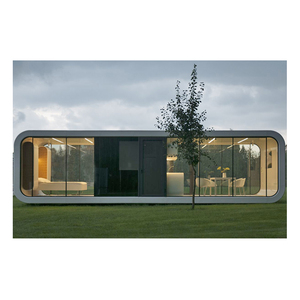
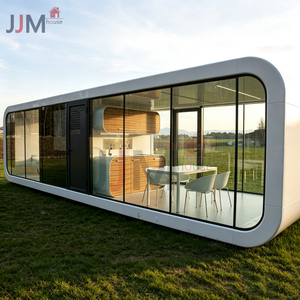
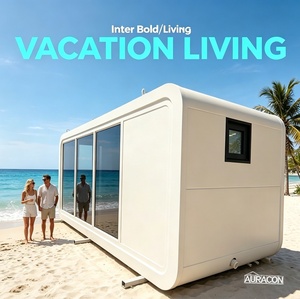
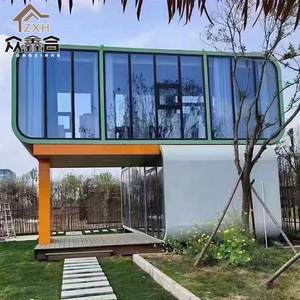
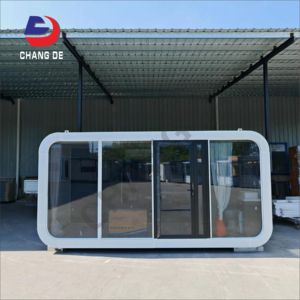
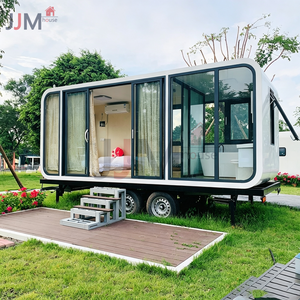
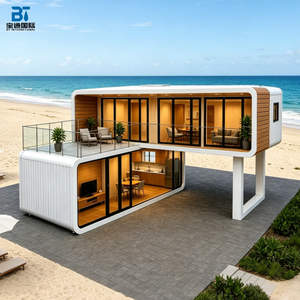
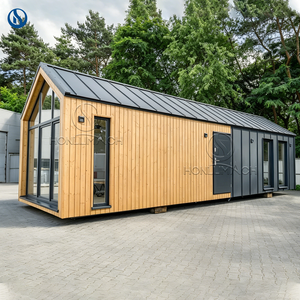
In modern industrial prefabrication, structural steel framing serves as the primary load-bearing foundation for modular architecture, commercial accommodation, and industrial site infrastructure. As a dedicated CE Certified Steel Frame Factory & Exporter, our manufacturing methodology adheres strictly to European Standard EN 1090-1:2009+A1:2011 (Execution of steel structures and aluminium structures) and EN 1090-2 (Technical requirements for steel structures) under Execution Class EX2 and EX3.
The structural efficacy of our modular frames—spanning Apple Cabins, Space Capsules, and Detachable Container Homes—relies on cold-formed high-tensile structural steel profiles (S275JR and S355JR conforming to EN 10025-2). Every structural member undergoes automated CNC roll-forming, laser cutting, and robotic arc welding certified under ISO 3834-2 (Comprehensive Quality Requirements for Fusion Welding). This guarantees dimensional tolerances within $\pm 1.0\text{ mm}$, eliminating structural deviation during multi-storey stacking and field assembly.
| Mechanical & Structural Parameter | Standard Factory Specification | Engineering Testing Method |
|---|---|---|
| Structural Steel Grade | S355JR / Q355B Hot-Rolled Structural Steel | EN 10025-2 Tensile & Yield Testing |
| Corrosion Protection | Hot-Dip Galvanization ($\ge 275\text{ g/m}^2$, $\ge 45\,\mu\text{m}$) + Epoxy Coating | ISO 1461 & Salt Spray Corrosion Test (ISO 9227) |
| Wind Load Resistance | Up to 250 km/h (Category 5 Typhoon Rating) | Finite Element Analysis (FEA) & Wind Tunnel Modeling |
| Seismic Loading Capacity | Zone 4 Seismic Resistance ($PGA \ge 0.4g$) | Dynamic Structural Response Analysis |
| Roof Load Capacity | $2.5\text{ kN/m}^2$ Uniformly Distributed Live Load | Physical Static Load Test Protocol |
To withstand harsh marine and tropical macro-environments, our frames feature dual-layer atmospheric defense systems. Primary members undergo continuous hot-dip galvanization, creating an intermetallic zinc-iron alloy barrier that prevents oxidation even in severe salt-spray conditions (Category C4/C5 marine environments). Secondary exterior elements are coated with thermosetting fluorocarbon (PVDF) electrostatic powder, providing UV stabilization and zero structural degradation across a design service life exceeding 30 years.
Global architectural and construction engineering procurement is experiencing a paradigm shift driven by stringent environmental governance, volatile material pricing, and accelerated project delivery schedules. B2B buyers, EPC contractors, and commercial developers are rapidly transitioning from traditional on-site masonry construction to industrialized prefabrication. Understanding these macro procurement trends is vital for project risk mitigation and long-term capital efficiency.
With the implementation of the EU Carbon Border Adjustment Mechanism (CBAM), enterprise buyers require full Environmental Product Declarations (EPD) for structural steel exports. Advanced factories utilize electric arc furnace (EAF) recycled steel and low-emission production lines to minimize embedded carbon.
Modern procurement prioritizes standard modular components optimized for containerized sea freight. By utilizing DfMA protocols, 40ft HQ shipping containers can transport up to 14 Z-Type folded units or 4 complete Flat-Pack sets, reducing ocean freight expenditure by up to 65% per square meter.
Procurement teams now demand Building Information Modeling (BIM) LOD 350+ structural files during pre-production. This permits real-time collision detection for MEP (Mechanical, Electrical, Plumbing) pathways prior to factory frame production, eliminating on-site rework.
Rather than evaluating initial purchase price alone, institutional procurement frameworks now benchmark operational thermal performance ($U$-values below $0.22\text{ W/m}^2\text{K}$) and relocatability assets. Steel-frame modular units retain high residual value as movable capital assets.
The prefabricated modular construction market is evolving from basic emergency shelter solutions into high-end architectural assets. Driven by growth in eco-tourism, remote mining operations, and rapid urban infrastructure expansion, two dominant technological trends are reshaping factory fabrication standards:
A. Advanced Envelope Thermal Performance: Modern steel frame cabins incorporate structural insulated sandwich panels featuring continuous PIR (Polyisocyanurate) or high-density Rock Wool cores. Coupled with double-chamber thermal break aluminum framing and Low-E tempered glazing, these structures minimize HVAC energy consumption in extreme ambient conditions ranging from $-30^\circ\text{C}$ alpine sites to $+50^\circ\text{C}$ desert camps.
B. Plug-and-Play Off-Grid Smart Systems: Contemporary commercial buyers favor factory-fitted modular spaces equipped with pre-installed DC solar microgrids, greywater treatment loops, integrated HVAC heat-pumps, and smart automated IoT management panels. These turn-key modules allow immediate commercial monetization upon arrival at remote project sites without requiring extensive municipal utility connections.
Backed by decades of structural engineering expertise, NuPON Technology Phils. Corp. (NuPON Prefab) stands as an accredited manufacturing power delivering fully compliant steel frame modular structures worldwide. Our institutional operational framework guarantees technical precision, procurement compliance, and comprehensive post-handover support.
With over 100+ dedicated technical engineers, 12 regional service hubs, and a global B2B footprint serving more than 1,000 corporate clients across APAC, the Middle East, Oceania, and Africa, we supply end-to-end engineering submittals, factory production control documentation, and international shipping stowage optimization plans for every procurement contract.