Engineered in China to international building codes. Factory-prefabricated, thermally insulated, structural steel mobile units delivered worldwide.
1. Technical Whitepaper: The Evolution of Mobile Offices & Modular Containerized Structures
As global commercial activities, construction infrastructure projects, and eco-tourism initiatives expand into remote and urban-dense locations, traditional brick-and-mortar office construction faces unprecedented challenges. Key hurdles including soaring local labor costs, extended site disruption, stringent environmental regulations, and weather-delayed construction schedules have forced enterprise procurement directors to rethink workplace deployment.
China's manufacturing sector has responded by pioneering Generation-2 and Generation-3 Prefabricated Modular Architecture. Today's mobile office pods and containerized buildings are no longer crude, temporary metal boxes. Instead, they represent sophisticated precision engineering—combining structural steel framework (Q235B/Q355B hot-dip galvanized steel), high-performance thermal envelopes (Polyurethane/PIR and High-Density Rock Wool), integrated MEP (Mechanical, Electrical, and Plumbing) conduits, acoustic decoupling technologies, and architectural smart-glass facades.
1.1 Structural Integrity & Typhoon-Grade Structural Engineering
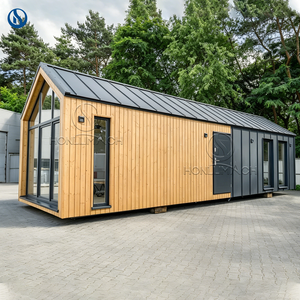
The structural backbone of modern mobile offices manufactured in China relies on cold-formed rolled steel profiles and robotically welded corner castings that mirror ISO shipping container specifications. This engineering design grants mobile office pods exceptional multi-directional load distribution:
- Wind Load Rating: Engineered to resist wind speeds up to 210–250 km/h (equivalent to Category 14–15 Typhoons and Hurricanes).
- Seismic Performance: Rated for Seismic Zone 8 acceleration, absorbing kinetic force through controlled ductility in high-strength bolted connections.
- Floor Loading Capacity: Standard live loads specified at 2.5 kN/m² to 4.0 kN/m², accommodating heavy office equipment, server racks, and multi-occupant executive boardrooms.
- Stackability & Scalability: Precision-engineered corner fittings allow modular stacking up to 3 storeys without external structural bracing, drastically maximizing site footprint efficiency.
| Engineering Parameter |
Standard Mobile Pod Specs |
Heavy-Duty Mining/Resort Specs |
Compliance Test Standard |
| Structural Frame Material |
Hot-Dip Galvanized Q235B Steel |
Reinforced Q355B Steel (3.0-4.0mm) |
GB/T 700-2006 / ASTM A36 |
| Wall Panel Insulation |
50mm EPS / PU Sandwich Panel |
75mm-100mm Non-combustible Rock Wool |
EN 13501-1 Class A1 Fire Rating |
| Roof Waterproofing |
Internal Concealed 4-Corner Drainage |
Seamless Steel Double-Sloped Cap + Gutters |
Zero Leakage Test under 200mm/hr Rain |
| Thermal Conductivity (U-Value) |
0.38 W/m²K |
0.22 W/m²K (Cold Climate Package) |
ISO 10211 / ASHRAE 90.1 |
| Acoustic Decoupling (STC) |
32 dB Noise Reduction |
45+ dB Double-Glazed Argon Glazing |
ISO 717-1 Acoustic Rating |
2. Future Global Procurement Trends for Mobile Offices & Modular Pods
B2B procurement managers across North America, Europe, Australia, the Middle East, and Southeast Asia are shifting their capital expenditure (CapEx) strategy towards modular, re-deployable assets. Understanding these future purchasing trajectories provides strategic advantages for EPC contractors, mining conglomerates, and commercial property developers.
2.1 Plug-and-Play Off-Grid Smart Mobile Workspaces
Modern remote workforces require instant connectivity and self-sustaining energy systems. The newest generation of exported Chinese mobile offices features pre-integrated rooftop solar array mountings, lithium battery energy storage systems (BESS), and low-voltage DC interior wiring. Combined with IoT climate control sensors and smart access management, these units operate independently in off-grid exploration zones and eco-tourism reserves without requiring local grid tie-in.
2.2 Sustainable Circular Economy & Residual Value Protection
Unlike fixed masonry construction which generates massive demolition waste and total capital loss upon project termination, prefabricated mobile offices function as movable capital assets. Project developers can easily deconstruct, flat-pack, or crane-lift mobile office pods to new site locations. On average, a high-quality galvanized steel mobile pod retains 60–75% of its economic value after 5 years of field operations, providing protection for corporate asset balance sheets.
2.3 Rapid Freight Density Optimization (Flat-Pack & Z-Fold Engineering)
With ocean freight rates fluctuating dynamically, global buyers prioritize shipping cube optimization. Leading Chinese exporters have refined logistics configurations:
- Flat-Pack Modular Systems: Allows up to 4 complete 20ft mobile office units to be bundled into a single ISO 40ft High-Cube container, reducing sea freight costs by 75%.
- Z-Type & X-Type Foldable Pods: Pre-assembled units with factory-fitted wiring, hinged panel walls, and pre-hung doors fold down to 350mm–420mm height profiles. Up to 12 to 14 folded units fit onto a single flatbed trailer or shipping container, enabling deployment within 15 minutes of site delivery.
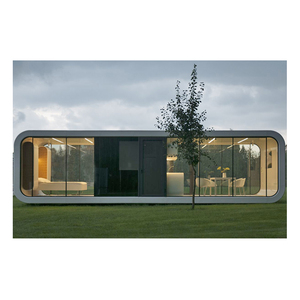
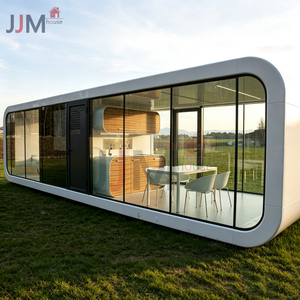
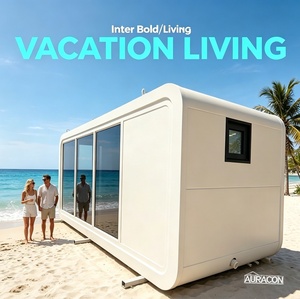
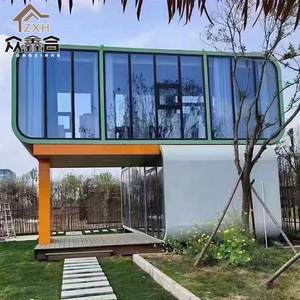
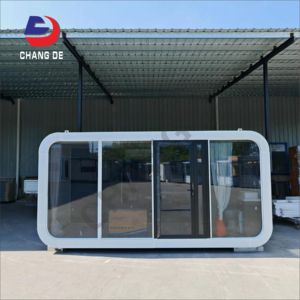
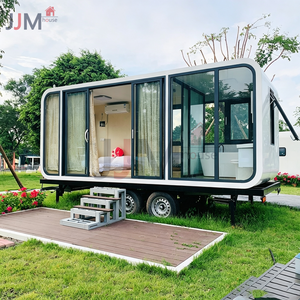
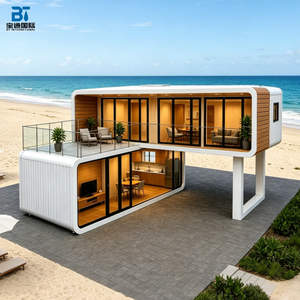
- Fully Finished Monolithic Space Capsules & Apple Cabins: Delivered 100% turnkey with internal sanitary fittings, lighting, cabinetry, and double-glazed panoramic windows for plug-and-play installation via mobile crane.
3. Industry Technology Trends: Architectural Design & Smart Materials
The convergence of modern industrial design and advanced materials science has transformed the aesthetics of mobile offices from utility boxes to architectural masterpieces.
Aluminium Aviation Shells
Used extensively in Apple Cabins and Space Capsules. Fluorocarbon-coated (PVDF) curved aviation aluminum plates provide 30-year resistance against salt-spray corrosion, UV degradation, and thermal expansion.
Panoramic Low-E Glazing
Double or triple-layer tempered curtain glass with Argon gas filling and Low-E thermal coatings. Offers panoramic 270° outdoor visibility while blocking 99% of harmful UV rays and reducing solar heat gain.
Concealed 4-Corner Drainage
Eliminating external gutting failures, Gen-2 detachable frames integrate sloped roof channels leading into structural corner columns with internal PVC downspouts, preventing water ponding and roof leaks during torrential downpours.
Partnering with China's leading mobile office manufacturing infrastructure to deliver fully certified, field-proven modular assets worldwide.
Robotic Manufacturing
Automated laser cutting and robotic seam welding guarantee millimeter-level dimensional accuracy across all steel framing components, ensuring 100% inter-changeability on project sites.
Full Customization (OEM/ODM)
Tailor-made floor plans, wall finishes, window schedules, electrical plug standards (US, EU, UK, AU), integrated HVAC, and custom branding tailored precisely to contract submittals.
Strict Quality Control
Every batch undergoes rigorous quality assurance including ultrasonic weld inspection, 24-hour high-pressure rain testing, and load-bearing stress evaluations before export packaging.
Global Technical Support
Complete BIM models, 3D assembly animations, structural calculation books, and on-site engineering supervision available for large-scale multi-unit camp deployments.
Detailed technical responses to common questions raised by procurement managers, structural engineers, and import buyers.
What structural steel grades and protective coatings are used in your mobile offices?
Our standard mobile office structures utilize high-tensile Q235B or Q355B structural steel. Frame profiles undergo hot-dip galvanization with a minimum coating thickness of 80–120 g/m² (or optional 275 g/m² for coastal environments). The steel frame is finished with a 2-coat epoxy zinc-rich primer and heavy-duty polyurethane topcoat, yielding exceptional resistance against salt spray, atmospheric corrosion, and mechanical abrasion over a 30 to 50-year structural design life.
How are mobile office pods packaged, loaded, and transported for ocean export?
Packaging depends on the specific mobile pod series selected:
- Detachable & Flat-Pack Units: Packed in self-contained bundles where top and bottom frames form a protective crate enclosing wall panels, windows, and hardware. Exactly 4 flat-pack sets or 6-8 detachable knock-down units fit into one 40ft HQ shipping container.
- Foldable Z/X Units: Fully pre-wired and pre-assembled at the factory, then folded flat to a thickness of 350mm–420mm. 10 to 14 folded units are loaded per flatbed trailer or open shipping rack.
- Commercial Apple Cabins & Space Capsules: Shipped as monolithic complete structures via 40ft Flat-Rack (FR) containers or roll-on/roll-off (RoRo) vessels, pre-fitted with shrink-wrap marine protection.
What fire resistance and thermal insulation standards do these modular units meet?
We offer tailored panel cores based on regional building code requirements:
- Rock Wool Cores: Non-combustible Class A1 fire rating (EN 13501-1), providing up to 2-hour structural fire integrity and thermal conductivity down to 0.038 W/mK. Ideal for industrial, mining, and public infrastructure projects.
- Polyurethane (PIR/PUR) Cores: B1/B2 fire rating with superior thermal performance (R-values up to R-25+), maintaining comfortable indoor office climates in extreme desert environments (+50°C) or arctic locations (-40°C).
Can electrical systems, HVAC, and plumbing be configured to destination country standards?
Yes. All MEP (Mechanical, Electrical, Plumbing) installations are factory pre-wired and pre-plumbed to match national electrical codes of the destination country. We offer 110V-120V 60Hz or 220V-240V 50/60Hz dual-circuit configurations, complete with UL/CE/SAA-certified circuit breakers, local socket formats (Type A, B, C, G, I), LED troffer/strip lighting, pre-piped split-system air conditioner sleeves, and quick-connect plumbing manifolds for rapid site utility connections.
What ground foundation preparation is required prior to site installation?
Because our mobile offices feature rigid self-supporting structural steel floor frames, extensive concrete foundation slab pours are rarely necessary. Depending on soil load-bearing capacity, site options include:
- Concrete point piers or corner pad footings at structural corner post locations.
- Compacted gravel beds with pre-cast concrete sleepers or wooden dunnage.
- Helical ground screw anchors for temporary or ecologically sensitive terrain (no ground excavation required).
What is the production lead time for bulk enterprise mobile office orders?
Standard prototype or single-unit sample orders are completed in 7–10 days. Batch commercial orders (e.g., 50 to 200 mobile office containers or workforce accommodation modules) are typically manufactured within 15–25 calendar days thanks to automated high-capacity laser cut lines and robotic welding bays. Ocean transit time varies by regional destination (e.g., 10–14 days for Southeast Asia/Australia, 20–30 days for North America and Europe).
 PCAB Accredited Partner
 D-U-N-S Verified Supply Chain
 PHILGEPS Registered Supplier
 SEIPI Recognized Industry Member