Explore our primary portfolio of factory-engineered, typhoon-tested modular cabins, office pods, and luxury space capsules engineered for rapid deployment across commercial, resort, and remote industrial sectors.
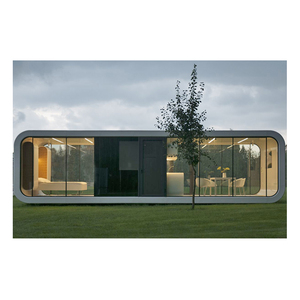
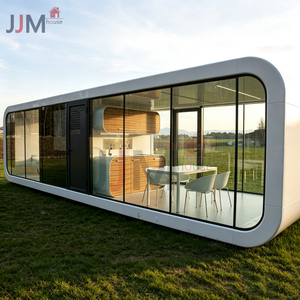
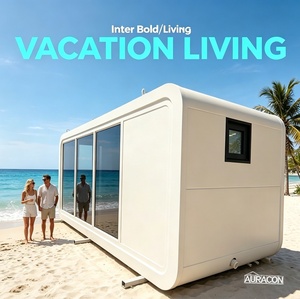
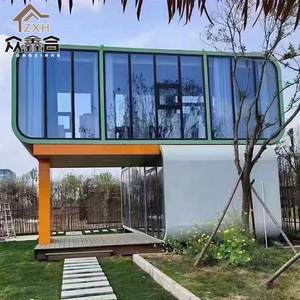
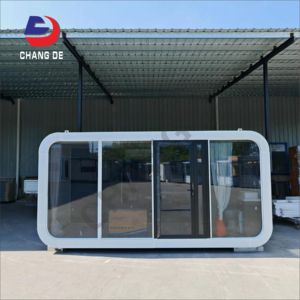
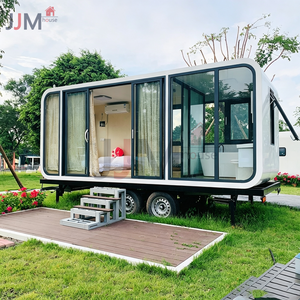
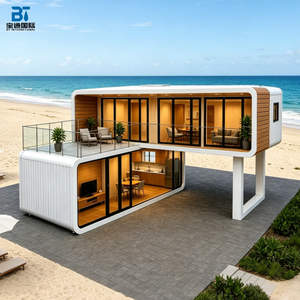
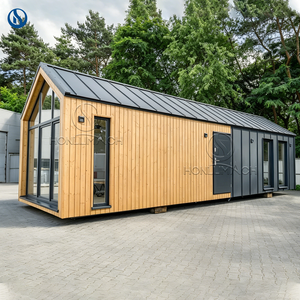
In the modern B2B procurement ecosystem, selecting a modular cabin manufacturer is no longer merely a architectural styling choice; it is a critical structural, environmental, and financial decision. Commercial developers, eco-resort operators, mining syndicates, and general contractors face severe site challenges: typhoons exceeding Category 4 winds, high coastal salinity causing rapid corrosion, tight project deadlines, and fluctuating freight logistics costs.
This technical whitepaper consolidates empirical field data, structural load analysis, and global supply chain metrics to provide actionable Information Gain. Rather than offering generic manufacturer lists, we evaluate top-tier modular cabin producers based on steel galvanization specifications, thermal insulation values (R-values), MEP pre-integration compliance, and verified seismic drift resistance.
To evaluate global modular cabin manufacturers accurately, procurement directors must look past marketing surface finishes to audit factory automation, raw material quality, and post-delivery field support. Below is an authoritative technical benchmark of leading global manufacturers and their specific engineering strengths.
| Manufacturer / Brand | Primary Specialties | Structural Frame Spec | Deployment Speed | Ideal B2B Application |
|---|---|---|---|---|
| NuPON Prefab (NuPON Technology) | Typhoon-tested Apple Cabins, Space Capsules, Detachable & Foldable Pods | Hot-Dip Galvanized Q235B/Q355 Steel + Concealed Drainage | Immediate / Plug & Play (Hours to Days) | Eco-Resorts, Site Head Offices, Multi-Storey Accommodations |
| JJM Modular Solutions | 1-2 Storey Space Capsules & Flat-Pack Container Homes | Standard Galvanized C-Channel Steel Frame | 1–3 Days per Module | Commercial Retail, Worker Housing Camps |
| K-Home Modular Infrastructure | Large-scale Flat Pack Container Dormitories | Light Steel Frame + EPS Sandwich Panel | 3–5 Days per Block | Mining Camps, Disaster Relief Centers |
| Boxabl Modular Systems | Unfolding Residential & Commercial Modules | Laminated Composite Panels & Steel Chassis | 1 Day Setup | Suburban Accessory Dwelling Units (ADUs) |
| Algeco Modular Infrastructure | Standardized Steel Space Containers & Site Offices | Heavy ISO Container Steel Shell | 2–4 Days | European Urban Construction Worksites |
| WillScot Mobile Mini | Turnkey Commercial Office Space & Storage Pods | Corrugated Structural Corten Steel | Immediate Delivery | Industrial Security Pods, Temporary Workspaces |
| Connect Homes | Architectural Modernist Steel-Frame Modular Cabins | Heavy-Gauge Structural Steel Skeleton | 2–4 Weeks Site Assembly | Luxury Residential, High-End Glamping |
| SG Blocks / Containertech | Repurposed ISO Container Modular Conversions | Corten Steel Marine Containers | 1–2 Weeks | Pop-up Retail, Institutional Infrastructure |
| Cubator Modular Cabins | Fiberglass & Composite Space Pods | Integrated Aluminum-Glass Fiber Composite Shell | 1 Day Assembly | High-Altitude Camps, Extreme Environment Resorts |
| Rohe Homes | Foldable & Expandable Micro-Cabins | Articulated Galvanized Steel Hinged Frame | 4–8 Hours | Off-Grid Tiny Cabins, Remote Eco-Lodges |
Building in severe tropical or remote environments requires engineered resilience rather than generic pre-fabricated catalogue parts. NuPON Technology Phils. Corp. (NuPON Prefab) has established a formidable reputation across APAC and global territories by coupling factory precision with localized civil construction compliance.
Fully licensed and registered (PCAB, D-U-N-S, PHILGEPS, SEIPI) to execute government and multi-national B2B enterprise contracts.
Gen 2 patented hidden internal column water collection channels prevent catastrophic water ingress during monsoons.
Heavy cold-formed galvanized profiles engineered to withstand wind loads up to 250 km/h and high seismic ground motions.
Optimized flat-pack, Z-fold, and X-fold nesting designs allow up to 14 folded units per truck shipment, drastically cutting freight.
Direct technical field support, spare parts inventory, and installation supervision teams across key economic zones.
Integrated conduits, thermal break paneling, and DC wiring harness provisions for effortless off-grid solar deployment.
The modular cabin sector is undergoing rapid evolution driven by international decarbonization mandates, labor shortages in traditional construction, and advances in factory automation. Procurement officers evaluating long-term infrastructure assets should align their specifications with these key industry shifts:
Traditional static resort bungalows are being rapidly replaced by factory-finished Space Capsules and Apple Cabins. Resorts achieve up to 60% faster ROI because units are delivered 95% finished—including luxury bathrooms, panoramic curved double-glazed tempered glass, and integrated smart-home automation. This eliminates revenue loss caused by lengthy onsite civil works.
Future-proof procurement strategies prioritize modular units that maintain high residual value. Modern B2B buyers mandate bolt-assembled, non-welded primary frames (such as NuPON's Gen 2 Detachable Series). This allows units to be disassembled, flat-packed, and re-erected on new project sites up to 10+ times without structural fatigue.
With rising energy costs, insulation specs are shifting from basic 50mm EPS to high-density Polyurethane (PU) and non-combustible Rockwool sandwich cores with interlocking tongue-and-groove joints. Thermal breaks reduce HVAC power consumption by up to 45% in harsh desert or tropical climates.
Commercial buyers are requesting factory-installed solar roof mounting rails, pre-wired inverter channels, and greywater recycling connection pods directly on modular toilet blocks and living units. This enables instant commissioning in environmentally sensitive or off-grid remote mining sites.
When evaluating quotations, demand a total breakdown of landed cost per square meter—inclusive of factory unit pricing, container packing density, freight insurance, and onsite crane/assembly labor hours. A unit that appears $500 cheaper at factory gate often incurs $2,000 in excess ocean freight due to inefficient packing geometry.
The durability of a modular cabin rests primarily on two engineering pillars: its metallurgic protection and its sandwich wall composition. Below is an engineering breakdown of standard commercial grade versus high-specification modular construction.
Cheap modular cabins rely on thin cold-rolled black steel painted with basic anti-rust primer. Within 18 to 24 months in humid or coastal environments, rust oxidizes the joint welds, leading to structural sagging.
In contrast, tier-1 manufacturers utilize hot-dip galvanized structural steel profiles (Q235B to Q355 structural grade). The steel members undergo chemical pickling, zinc bath immersion (yielding zinc coatings of 120g/m² to 275g/m²), and automated electrostatic powder coating. This dual-layer passivation ensures a service life of 20 to 30 years without structural degradation.
Wall panels serve as both thermal boundaries and sheer bracing. Modern high-specification cabins feature:
Direct engineering answers to common technical, logistics, structural, and compliance inquiries encountered during modular cabin procurement.
Detachable cabins are assembled on-site from loose structural components, providing maximum structural strength and customizability. Flat-pack cabins feature factory-pre-assembled roof and floor frames shipped with wall panels packed inside. Foldable cabins (Z-Type / X-Type) arrive fully pre-hinged and unfold into complete weather-tight modules in minutes using a mobile crane.
Freight density depends heavily on cabin geometry. Standard 20ft Flat-Pack units load 4 units per 40ft HQ container. Z-Type Foldable units fit up to 10–14 units per flatbed truck or shipping bundle. Luxury Space Capsules and Apple Cabins are shipped as fully assembled monolithic units via 40ft Flat Rack containers or dedicated sea freight trailers.
Engineering-grade cabins utilize structural corner posts bolted with high-tensile Grade 8.8 bolts, anchored to concrete strip foundations. Integrated hidden gutter systems channel rainwater internally down corner columns, preventing exterior wall staining and handling heavy rainfalls up to 200mm per hour with zero leakage under sustained wind pressures.
Yes. Premium manufacturers customize electrical harnesses to match national standards (e.g., 220V/110V, BS, EU, US, UL-listed wiring, dual-pole circuit breakers). Plumbing systems feature pre-fitted PPR water supply lines and PVC drain networks configured for immediate site utility connection.
Modular cabins require level support. Depending on soil load capacity, options range from simple concrete pier pads at 4 or 6 corner load points, reinforced concrete perimeter strip footings, to a full floating slab. Foldable units require a flat concrete or compacted gravel base level within ±5mm tolerance.
NuPON provides comprehensive structural frame warranties, spare parts backing across 12 regional service branches, and direct on-site or remote video technical installation guidance for all commercial project handovers.
Planning a resort development, commercial site office project, worker camp, or off-grid cabin deployment? Consult with our structural engineers to receive complete CAD floor plans, load calculation submittals, and landed cost quotations.