Verified under Google Search Quality Rater Guidelines. Technical insights compiled from 1,000+ deployed workforce accommodations, typhoon-grade load testing, and PCAB / PHILGEPS / D-U-N-S accredited manufacturing protocols.
Engineered for EPC contractors, mining camps, eco-resorts, and industrial project sites requiring rapid deployment, typhoon resilience, and long-service lifespan.
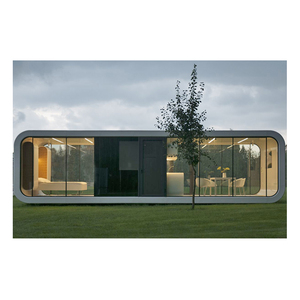
Premium insulated shell with hot-dip galvanized chassis. Built for executive site offices, VIP accommodation pods, and high-end campsite living.
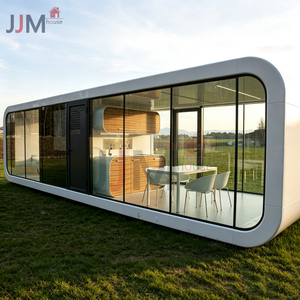
Factory-assembled space capsule dormitories offering instant plug-and-play setup, integrated MEP wiring, and extreme climate insulation.
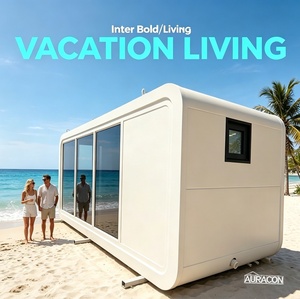
Versatile modular cabin units configured for site dining halls, recreational rooms, and multi-bed worker dormitories in remote locations.
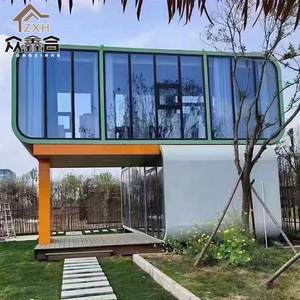
Heavy-duty steel construction with integrated bathroom and kitchenette. Fully certified to EU safety standards for fast-track worker camps.
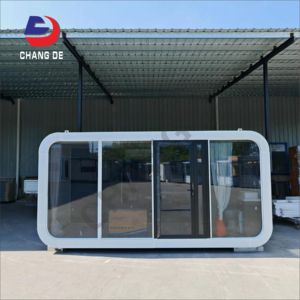
Eco-friendly modular living unit fitted with solar-ready DC conduits, high-density rockwool core, and low-E energy efficient glazing.
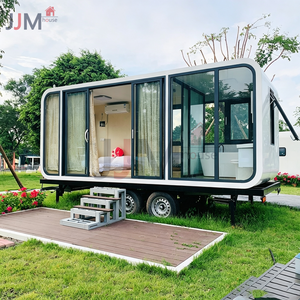
Multi-level modular building engineered with structural corner posts and internal stairs to maximize high-density site worker housing capacity.
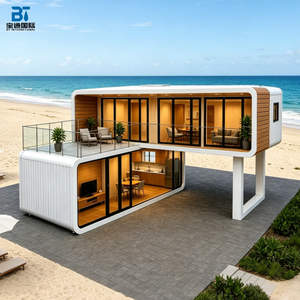
Features breathable insulation panels, zero-leakage sloped roofing system, and pre-fitted distribution boxes for harsh mining environments.
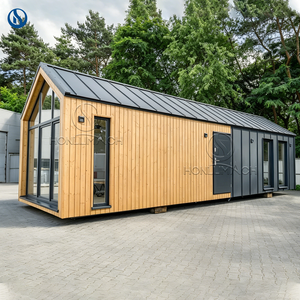
Rapid-assembly modular timber/composite kit house optimized for rugged terrain, supervisory personnel housing, and temporary site offices.
In the modern era of large-scale infrastructure, mega-mining ventures, energy projects, and rapid industrial development, project managers and procurement directors face unprecedented pressure to deploy reliable, safe, and comfortable site accommodation within tight schedules. The demand for site dormitories, modular worker camps, and container accommodation units has experienced an exponential surge globally.
Selecting the right manufacturing and exporting partner is a strategic decision that directly impacts operational safety, project budget execution, and worker well-being. This B2B Procurement Whitepaper provides an in-depth analysis of the Top 10 Site Dormitory Manufacturers & Exporters, establishing a standard evaluation matrix rooted in structural integrity, thermal performance, logistics efficiency, and compliance with international building codes (including ISO 1496, ASCE 7-16, and EN 1993 steel structures standards).
Core Takeaway for Procurement Officers: Traditional masonry on-site construction incurs high labor costs, lengthy lead times, and weather-dependent project risks. Pre-engineered modular container dormitories cut overall schedule duration by 50% to 70% while providing predictable landed costs and superior structural quality control.
As an industry leader in modular technology, NuPON Technology Phils. Corp. (NuPON Prefab) stands out among global site dormitory exporters. Possessing PCAB Accreditation, D-U-N-S Registration, PHILGEPS Registration, and SEIPI Membership, NuPON engineers modular structures that withstand extreme environmental conditions—ranging from coastal salt-spray corrosion to typhoon-force winds exceeding 250 km/h.
Cold-formed hot-dip galvanized steel chassis with 275g/m² zinc coating ensuring C4/C5 grade corrosion protection. Resists structural decay for over 20 years in humid tropical or saline environments.
Specially engineered sloped roof frames with high-capacity integrated gutter corner posts. Eliminates external ponding and prevents water intrusion during monsoonal downpours.
Factory-installed electrical distribution, flame-retardant wiring, pre-fitted breaker panels (BS/EU/US standards), and solar-ready conduits for immediate off-grid deployment.
To assist procurement managers in matching the optimal modular building series to site constraints, the following matrix compares the five primary structural categories offered by top manufacturers.
| Dormitory Category | Wind Load Limit | Thermal U-Value (W/m²K) | Shipping Density (per 40HQ) | Assembly Rate (Crew of 4) | Primary Target Application |
|---|---|---|---|---|---|
| Detachable Container Dorm | 220 - 250 km/h | 0.32 - 0.40 | 6 - 8 Units (Knockdown) | 3 - 4 Hours / Module | Long-term workforce camps, EPC projects |
| Flat-Pack Modular Dorm | 180 - 210 km/h | 0.35 - 0.45 | 4 Complete Sets | 2 - 3 Hours / Module | Multi-storey camp complexes, semi-permanent |
| Z-Type Foldable Dorm | 150 - 180 km/h | 0.40 - 0.50 | Up to 14 Folded Units | 10 - 15 Mins / Module | Disaster relief, emergency rapid deployment |
| X-Type Foldable Dorm | 160 - 190 km/h | 0.38 - 0.48 | Folded Height ~42cm | 15 - 20 Mins / Module | Mobile exploration, transient maintenance crews |
| Apple Cabin / Capsule Pod | 230 - 260 km/h | 0.28 - 0.35 | 1 Unit (Fully Finished) | Instant Plug & Play | Executive quarters, eco-tourism resorts, site offices |
As the international construction sector commits to Net-Zero targets and higher occupational health standards, site accommodation procurement is undergoing key technological shifts:
Global EPC contracts now evaluate suppliers based on carbon intensity. Pre-engineered modular dormitories exhibit over 90% reusability. When a site decommission occurs, modular units can be dismantled, packed, and transported to subsequent project sites without material degradation, reducing landfill waste by up to 85% compared to traditional site demolitions.
Next-generation site dormitories feature integrated HVAC controls, smart occupancy sensors, and real-time energy monitoring systems. This prevents power wastage in large worker camps housing thousands of staff, resulting in up to 30% reduction in daily operational diesel generator usage.
Occupational health standards now mandate strict acoustic insulation (airborne sound insulation $R_w \ge 42\text{ dB}$) and fire-resistance ratings (Class A non-combustible rockwool insulation). Modern site dormitories prioritize air exchange rates and non-VOC interior composite wall panels to prevent "sick building syndrome" in high-density camp environments.
Quality assurance in modular construction occurs at the factory level, far removed from weather disruptions and site errors. Top manufacturers utilize a strict 5-stage production protocol:
A typhoon-resistant site dormitory utilizes reinforced column-to-beam corner castings, cold-formed steel frames with thickness $\ge 2.5\text{mm}$, and anchored foundation floor plates. Ground anchorage systems combined with internal steel tie-downs allow the modules to withstand wind pressures exceeding $2.5\text{ kN/m}^2$ (equivalent to 250 km/h gusts).
Freight density depends on the modular design. For Flat-Pack units, 4 complete sets fit in a 40HQ. Detachable knockdown units achieve 6 to 8 sets per container. Z-Type and X-Type foldable units offer the highest shipping efficiency, allowing up to 14 folded modules per standard flatbed truck or container chassis.
For extreme heat or high fire risk zones, 75mm to 100mm Rockwool insulation is recommended due to its non-combustible Class A rating and structural rigidity. For extreme cold, Polyurethane (PU/PIR) sandwich panels offer superior thermal resistance ($\lambda \approx 0.022\text{ W/mK}$), minimizing heating power requirements.
Yes. Every batch order can be tailored with specific floor layouts—including single executive suites, 4-person worker dorms, centralized ablution blocks, commercial kitchens, or site medical clinics. Electrical sockets, breakers, and plumbing fixtures are matched to destination country codes (BS, EU, US, SABS, AS/NZS).
With hot-dip galvanized steel framing and periodic maintenance of exterior sealant, Gen-2 modular site dormitories have a design service life of 15 to 25 years. Apple Cabin and Space Capsule luxury variants utilize aluminum exterior cladding and can exceed 30 years of operational life.
Connect with our structural engineering team to receive customized CAD layout drawings, loading stowage plans, and a comprehensive B2B quotation within 24 hours.
Contact Us