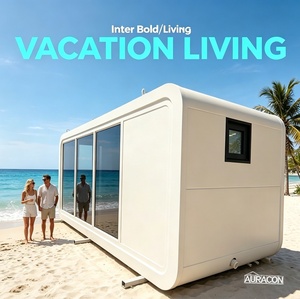
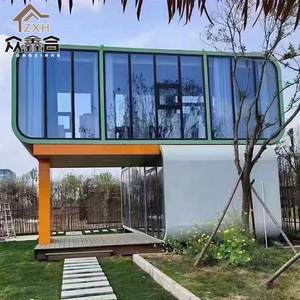
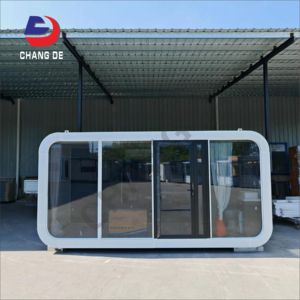
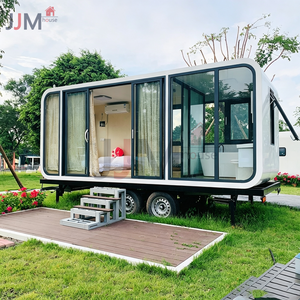
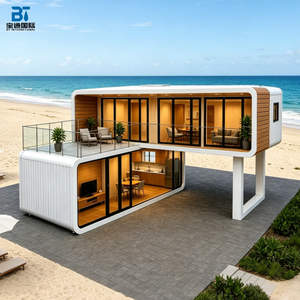
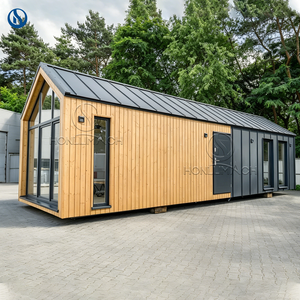
China Top Modular Container Vacation House Manufacturer & Exporter in Tokyo

Engineered Modular Cabins, Futuristic Space Capsules & Eco-Resort Villas Delivered Turnkey to Tokyo & Greater Kanto Region

Featured Modular Container Vacation House Solutions

High-ADR (Average Daily Rate) prefabricated architectural pods, expandable container homes, and glamping cabins custom-built for Japan's hospitality developers.
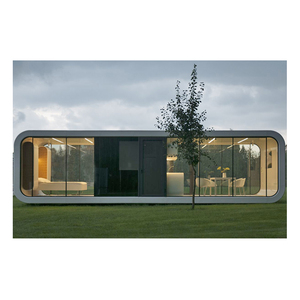
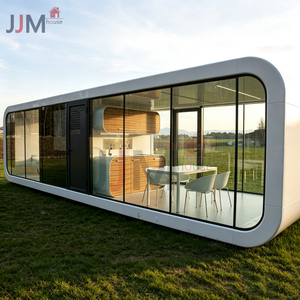
Luxury Apple Cabin Movable House Office Pod

Luxury Apple Cabin Movable House Office Pod Mobile Working Outdoor Garden Office Pod

Aluminium Shell Panoramic Glass Plug & Play
JJM House Factory 20ft 40ft Prefabricated Modular House

JJM House Factory 20ft 40ft Prefabricated Modular House Cabin Office Portable Home Pod Space Capsule Apple Cabin House Home

20ft / 40ft Option Galvanized Frame Multi-Use
20ft 40ft Apple Cabin Prefab Modular Cabin House for Resort

20ft 40ft Apple Cabin Prefab Modular Cabin House for Resort Outdoor Campsite Hotel Homestay Living Room Restaurant Cafe Project

Resort Grade Integrated Bathroom Fast Setup
CE Certified 20-Foot Modular Hotel Office Building Sleep Container

CE Certified 20-Foot Modular Hotel Office Building Sleep Container Smart Apple Cabin Bathroom Kitchen Modern Steel Design Fast

CE Certified Kitchenette Included Smart Lighting
Innovative Prefabricated Modular Apple Cabin for Off-Grid Living

Innovative Prefabricated Modular Apple Cabin for Modern Sustainable Off-Grid Living and Eco-Tourism Accommodation Solutions

Off-Grid Ready Thermal Break PU Low Carbon
JJM 1 2 Storey Space Capsule Apple Cabin

JJM 1 2 Storey Space Capsule Apple Cabin 20ft 40ft Modular Prefab Container House Modern Design Apartment Office Building

2-Storey Capable Steel Structure High Load Floor
Apple Cabin Apple Hut 40 ft Hotel Use Container House

Apple Cabin Apple Hut 40 ft Hotel Use Container House Sandwich Panel Modern Design Breathable Feature Easy Installation Outdoor

40ft Luxury Suite Breathable Membrane Resort Luxury
Garden Loft Wooden House Weekender Resort Tiny Log Cabin Kit

Garden Loft Wooden House Weekender Resort Tiny Log Cabin Kit Modular Prefab Living Container Structure

Hybrid Timber Look Weekender Loft Rapid Assembly

1. Industry Whitepaper: The Micro-Hospitality Transformation in Tokyo & Greater Kanto

The Japanese hospitality landscape is experiencing a paradigm shift driven by evolving traveler demands, surging inbound tourism to Greater Tokyo, and a distinct trend toward high-privacy, nature-immersed luxury stays. From the misty hot-spring valleys of Hakone and the scenic foothill retreats of Mount Fuji (Yamanashi/Shizuoka) to the elevated resort zones of Karuizawa and the coastal getaways of the Izu Peninsula, traditional hotel construction faces severe economic and structural headwinds.

Conventional masonry and timber construction in Japan is currently constrained by acute labor shortages in the local construction sector, soaring regional material costs, and stringent onsite noise and environmental regulations. As a primary alternative, China-manufactured modular container vacation houses have emerged as the gold standard for visionary real estate developers, hoteliers, and glamping site operators seeking fast-track capital deployment and high Average Daily Rates (ADR).

Information Gain Insight: Prefabricated modular buildings engineered in specialized Chinese manufacturing hubs cut on-site construction timelines in Japan by up to 70%, reducing total project capitalization cycles from 18 months down to less than 90 days from port entry at Yokohama or Tokyo Port to guest check-in.

Market Drivers in the Tokyo Metropolitan & Vacation Outskirts

Tokyo’s urban demographic is increasingly prioritizing weekend eco-escapes. This has triggered an unprecedented surge in demand for off-grid modular villas, luxury Apple Cabins, and futuristic space capsules. By manufacturing components off-site under factory-controlled precision and exporting fully finished pods directly to Japan via container vessel, project developers overcome the logistical hurdles of build sites situated in national parks, mountainous terrain, or steep slope parcels where traditional heavy construction is virtually unfeasible.

70%
Faster Onsite Erection
Shindo 7
Seismic Resistance Standard
0.18 W/m²K
High Thermal Efficiency U-Value
35+ Yrs
Structural Frame Design Life

2. Localized Technical Compliance & Engineering for Japan

Exporting modular container vacation houses to Japan requires strict engineering alignment with local building codes, extreme weather events, and unique geological conditions. Unlike standard freight containers, our dedicated modular vacation structures are built from ground-up heavy-gauge Q235B/Q355B hot-dip galvanized steel chassis integrated with cold-formed structural posts designed to meet Japan’s rigorous safety standards.

Seismic Resilience (Earthquakes)

Engineered with flexible bolted moment frames capable of absorbing high lateral seismic loads, complying with Japanese Shindo 7 vibration displacement tolerances.

Heavy Snow Load Ratings

Roof structures for Nagano or Niigata bound modules feature reinforced steel purlins designed for snow loads up to 2.5 kN/m² with sloped hidden eaves.

Typhoon Rainproofing

Gen 2 internal downpipe system with sealed EPDM rubber gaskets guarantees 100% zero leakage during intense Japanese monsoon typhoons (200mm/hr rainfall).

Japanese Electrical & MEP

Pre-wired factory circuits configured for 100V/50Hz (Tokyo Eastern Japan grid), PSE-compliant conduits, breaker panels, and plumbing connections.

Thermal Efficiency & Fire Retardancy Specifications

Japan experiences severe seasonal temperature deltas — from freezing, snowy winters in high altitude regions to hot, humid summers in coastal areas. Our modular container vacation houses utilize high-density polyurethane (PU/PIR) core sandwich panels or non-combustible Class A1 rock wool insulation (75mm to 100mm thickness). Paired with Low-E double-glazed hollow tempered glass windows wrapped in thermal-break fluorocarbon-coated aluminum frames, our units deliver exceptional heat retention, lower HVAC power requirements, and sound isolation up to 35dB.

3. Strategic Enterprise & Manufacturing Strengths

As a premier China-based modular container house manufacturer and global exporter, our state-of-the-art facility spans over 100,000 square meters of production space equipped with automated CNC laser cutting, robotic welding lines, and automated powder coating chambers. We maintain rigorous compliance records certified by global inspection bodies (CE, ISO9001, D-U-N-S, PCAB registered supply chains).

Enterprise Value Proposition: We bridge Chinese manufacturing cost efficiency with Japanese engineering precision. Every vacation pod undergoes strict Factory Acceptance Testing (FAT), including 24-hour high-pressure water deluge testing and structural load testing before ocean packing.

Comparative Performance Analysis: Modular vs. Traditional Build in Japan

Evaluation Parameter China Prefab Container Vacation Pod Traditional Masonry / Timber (Japan)
On-Site Construction Lead Time 7 - 14 Days (Pre-assembled Plug & Play) 6 - 12 Months (Weather Dependent)
Total Turnkey Landed Cost 35% - 50% Lower Capital Expenditure High Labor Cost & Rising Material Premiums
Seismic Performance High Ductility Flexible Steel Box Structure Rigid Joints Subject to Shear Cracking
Environmental Site Impact Near Zero Wet Works, Low Noise, No Debris Heavy Excavation, High Noise & Soil Disturbance
Asset Mobility & Expansion 100% Relocatable, Stackable, Expandable Fixed Structure (Demolition Required to Move)

4. Localized Development Trends in Tokyo & Japan Tourism

Four key macro trends are driving the adoption of modular container vacation houses across the Greater Tokyo Metropolitan area and regional destinations:

  • Micro-Resort Cluster Development: Landowners in Yamanashi and Nagano are turning small agricultural parcels into 5-to-10 pod micro-resorts. Space Capsules and Apple Cabins allow rapid scaling without permanent land degradation.
  • Experiential Luxury Glamping: High-spending inbound tourists prefer floor-to-ceiling panoramic curved glass Apple Cabins over traditional hotel rooms, driving room rates upwards of ¥40,000 to ¥80,000 per night.
  • Off-Grid Sustainable Operations: Integrated solar PV roof mount provisions, lithium battery energy storage, and gray-water recirculation modules fit seamlessly into our prefab chassis, ideal for secluded natural reserves.
  • Agile Workation Pods: Tokyo-based corporations are establishing satellite workation hubs in Chiba and Kanagawa beaches utilizing 20ft mobile working pods to offer remote employees wellness-centric work zones.

5. Frequently Asked Questions by Tokyo Developers & Buyers

Q: How are modular container vacation houses imported into Tokyo and delivered to site?
Units ship directly from China factories to Tokyo Port or Yokohama Port via ocean container vessels (SOC or flat-rack container packing). From the port, they are transported via standard flatbed trucks and positioned on site using a localized crane truck within hours.
Q: Do these modular cabins comply with Japanese Building Standard Law (Kenchiku Kijun-hō)?
Yes. We supply comprehensive structural engineering calculations, mill test certificates for steel framing, and non-combustible material datasheets required by Japanese licensed architects (Ikkyū Kenchikushi) to submit building confirmation applications (Kenchiku Kakunin Shinsei).
Q: How do the vacation cabins handle freezing winter temperatures in Nagano or Hakone?
Our units feature continuous thermal-break sandwich panels filled with high-density polyurethane (PU/PIR) or rock wool, double/triple glazed Low-E argon glass, and integrated electric floor heating conduits that maintain comfortable interior temperatures down to -20°C.
Q: Can electrical outlets and plumbing fixtures be customized to Japanese standards?
Absoltely. All wiring, breaker panels, JIS-standard switches, 100V outlets, and Japanese sanitary plumbing fittings (TOTO compliant drainage connectors) are pre-installed at the factory prior to shipment.
Q: What foundation preparation is required prior to unit delivery?
Modular cabins require simple concrete strip footings, point piers, or ground screw anchors. Because the integrated box frame carries its own dead load, heavy concrete slab foundations are generally unnecessary, saving time and excavation expense.
Q: What warranty and after-sales support do you provide to clients in Japan?
We offer a 5-year structural framework warranty and a 2-year warranty on glass, doors, and interior hardware. Spare parts, glass panels, and engineering field supervision can be dispatched rapidly via our global logistics partners.

Launch Your Resort Project in Tokyo & Japan Today

Contact our senior engineering export desk to receive complete 2D/3D CAD architectural drawings, structural calculation models, landed shipping quotes for Tokyo/Yokohama Port, and factory-direct pricing.